Nirvana
Nirvana
Nirvana
A music app - Case study
A music app - Case study
A music app - Case study
About
About
About
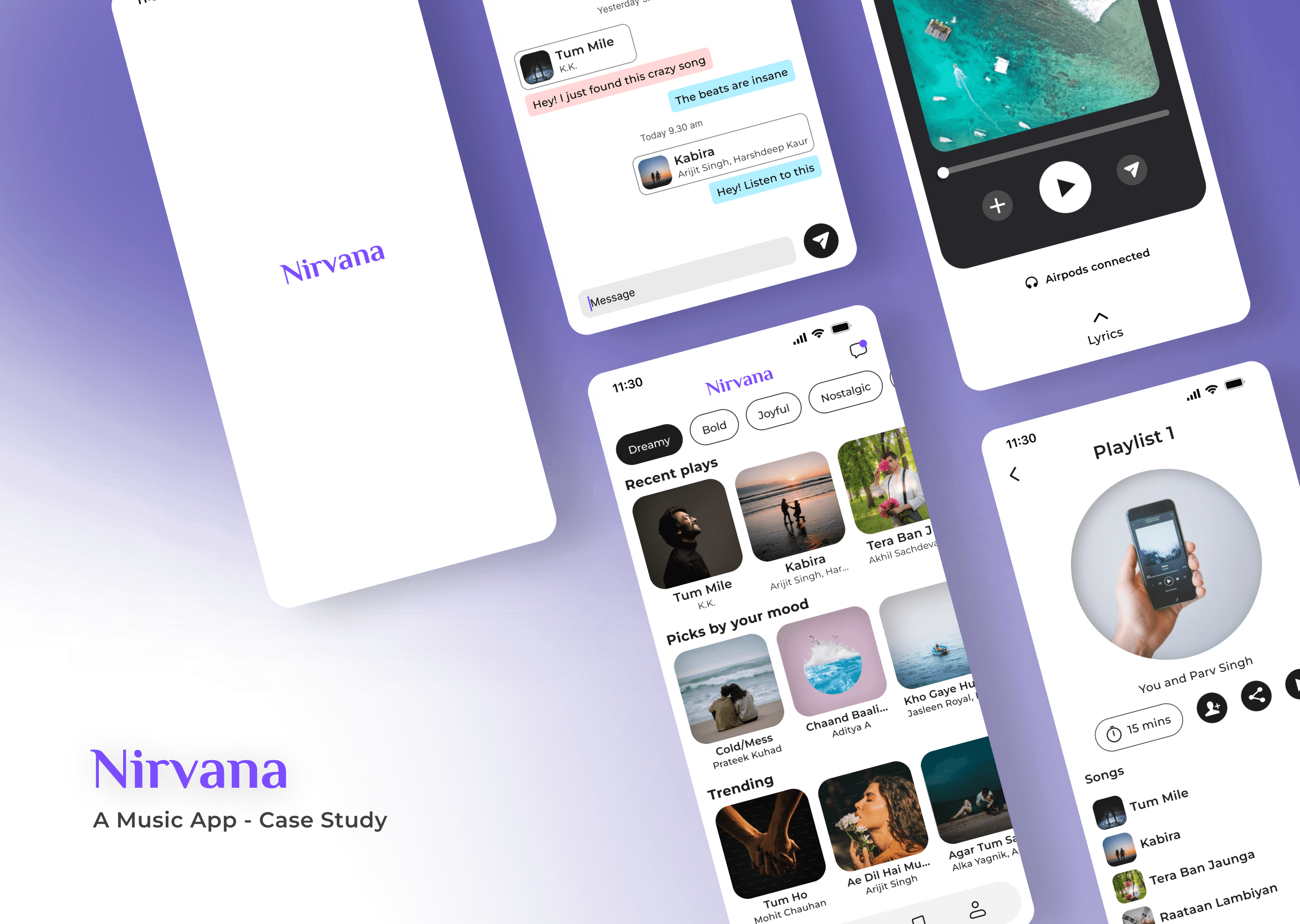
Nirvana is an app created to help people connect through music. The app aims to blend music listening and social connection offering seamless user experience. While popular apps lack the social aspect of sharing and collaborating features. Nirvana aims to fill this gap creating a space where users can connect through music.
Nirvana is an app created to help people connect through music. The app aims to blend music listening and social connection offering seamless user experience. While popular apps lack the social aspect of sharing and collaborating features. Nirvana aims to fill this gap creating a space where users can connect through music.
Nirvana is an app created to help people connect through music. The app aims to blend music listening and social connection offering seamless user experience. While popular apps lack the social aspect of sharing and collaborating features. Nirvana aims to fill this gap creating a space where users can connect through music.
Problem
Problem
Problem
Users cannot share music directly within the app, leading to reliance on external platforms like WhatsApp or Instagram. This disrupts user experience and reduces engagement within the app.
Traditional static music playback screens (play, pause, and next buttons) fail to engage younger audiences who expect modern, interactive experiences.
Lack of personal connection: Popular apps prioritize algorithms over human connection.
Users cannot share music directly within the app, leading to reliance on external platforms like WhatsApp or Instagram. This disrupts user experience and reduces engagement within the app.
Traditional static music playback screens (play, pause, and next buttons) fail to engage younger audiences who expect modern, interactive experiences.
Lack of personal connection: Popular apps prioritize algorithms over human connection.
Users cannot share music directly within the app, leading to reliance on external platforms like WhatsApp or Instagram. This disrupts user experience and reduces engagement within the app.
Traditional static music playback screens (play, pause, and next buttons) fail to engage younger audiences who expect modern, interactive experiences.
Lack of personal connection: Popular apps prioritize algorithms over human connection.
Solution
Solution
Solution
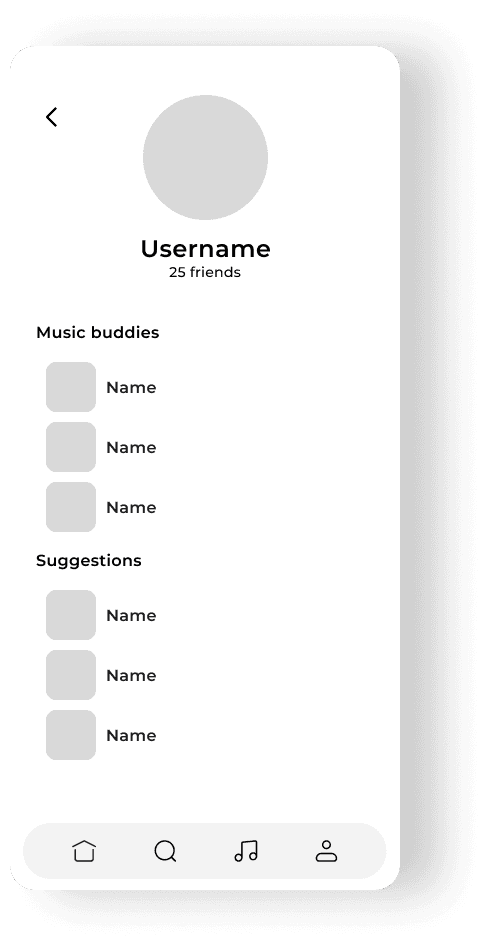
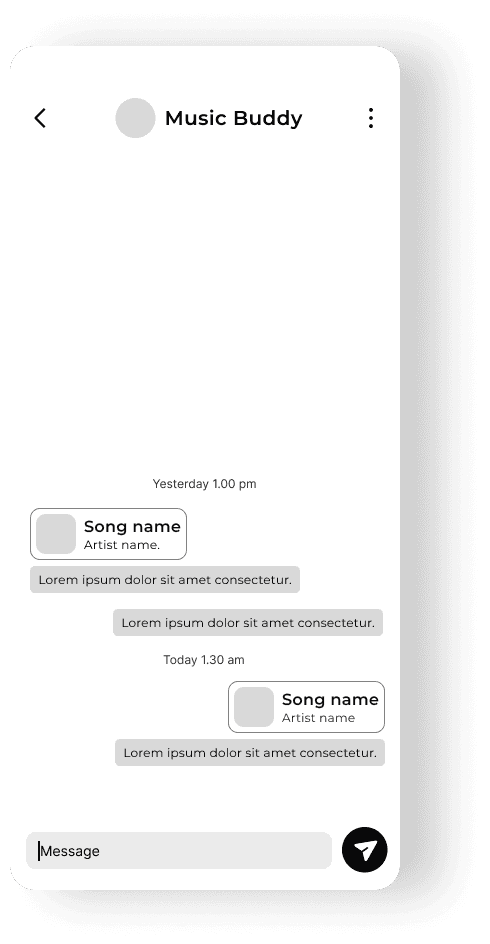
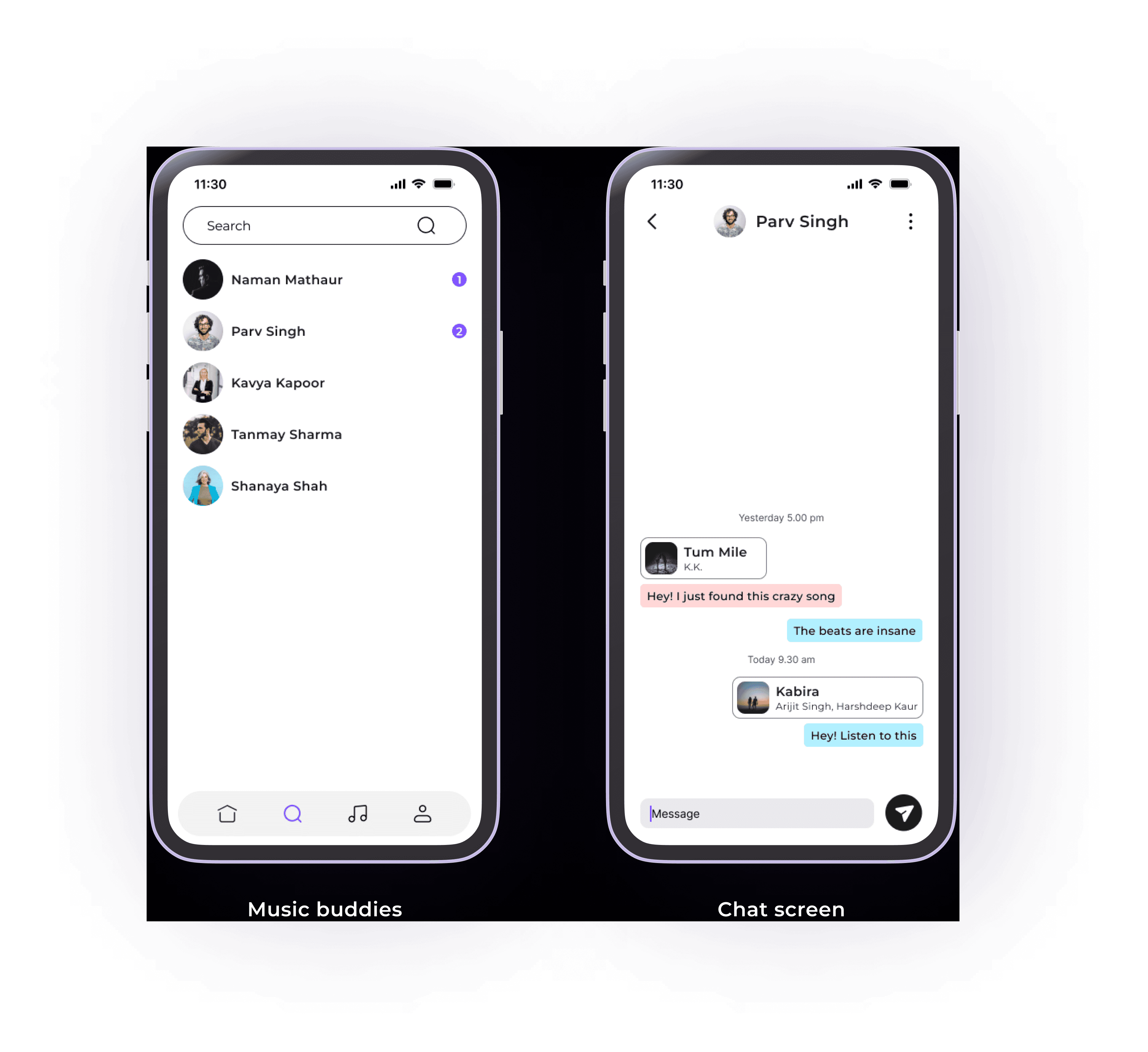
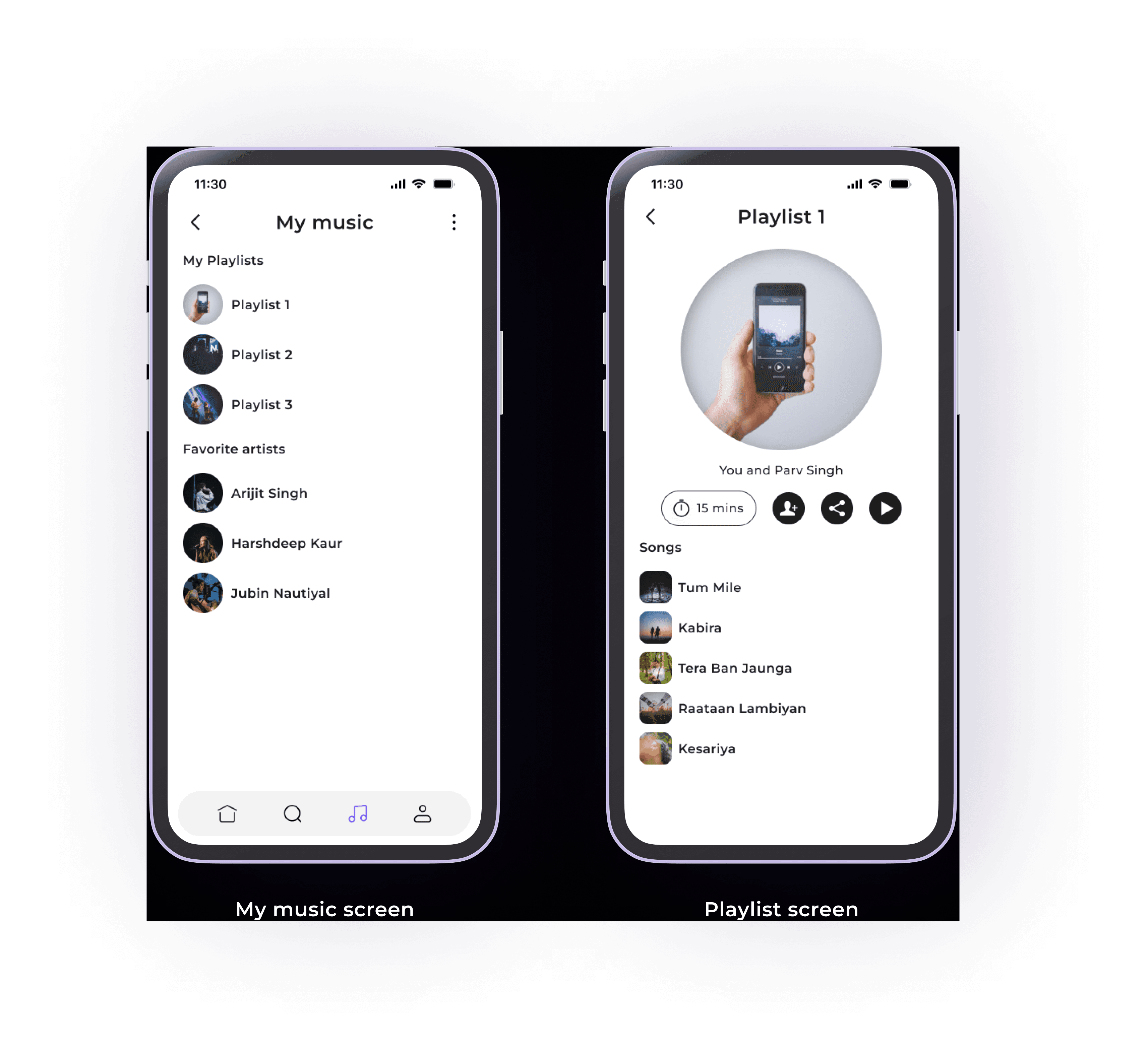
Implement a feature that allows users to share songs, playlists, or albums with in-app messaging.
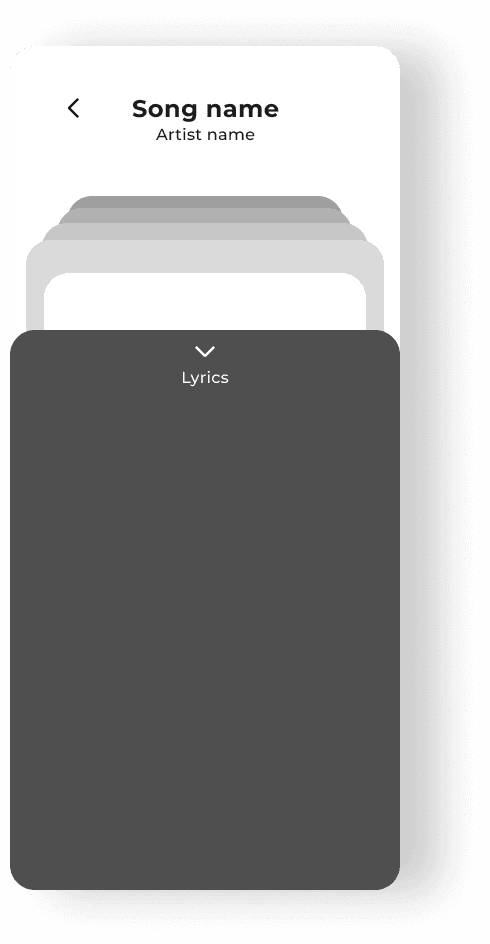
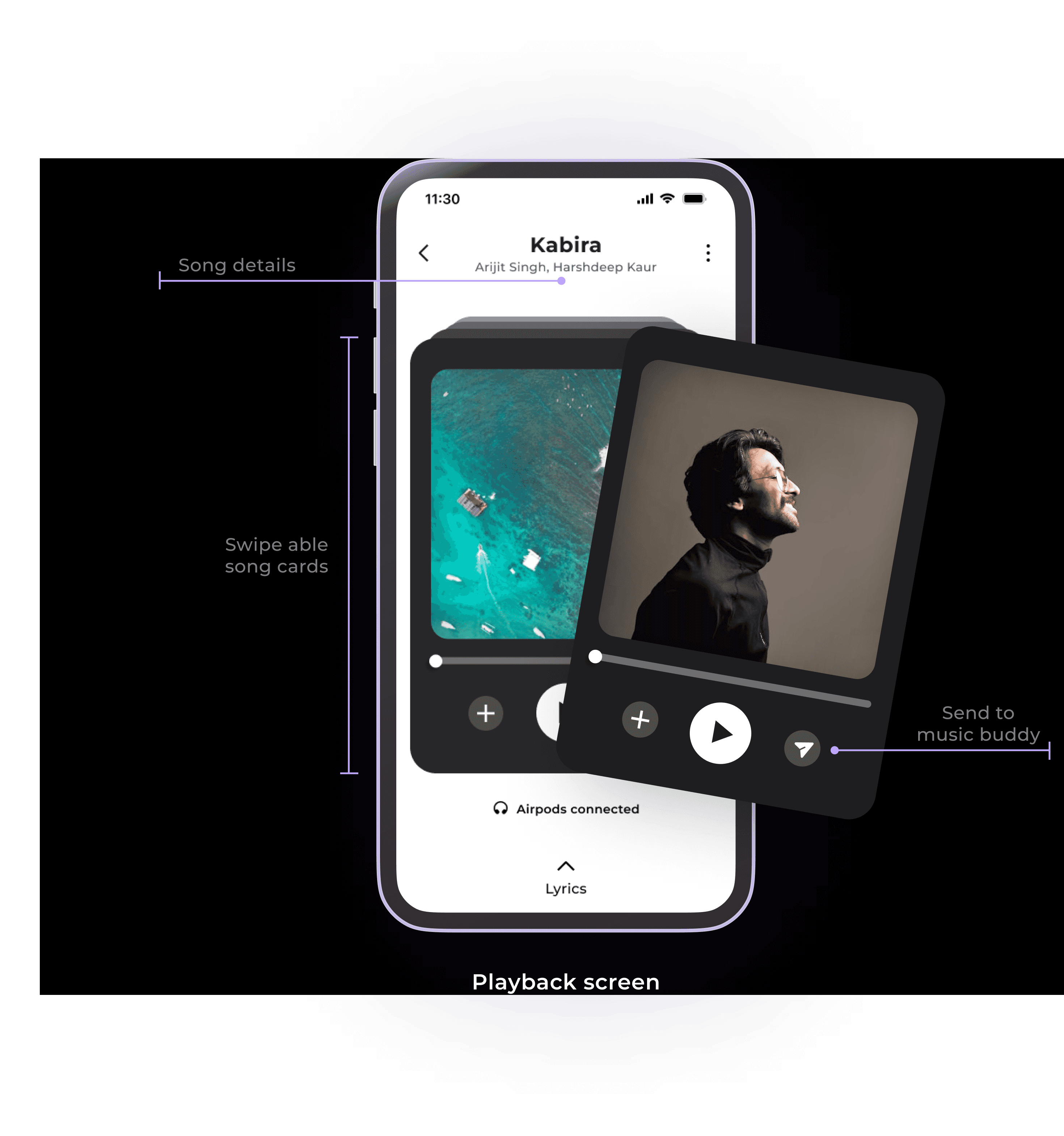
Replace static controls with swipe gestures to play the next and previous song.
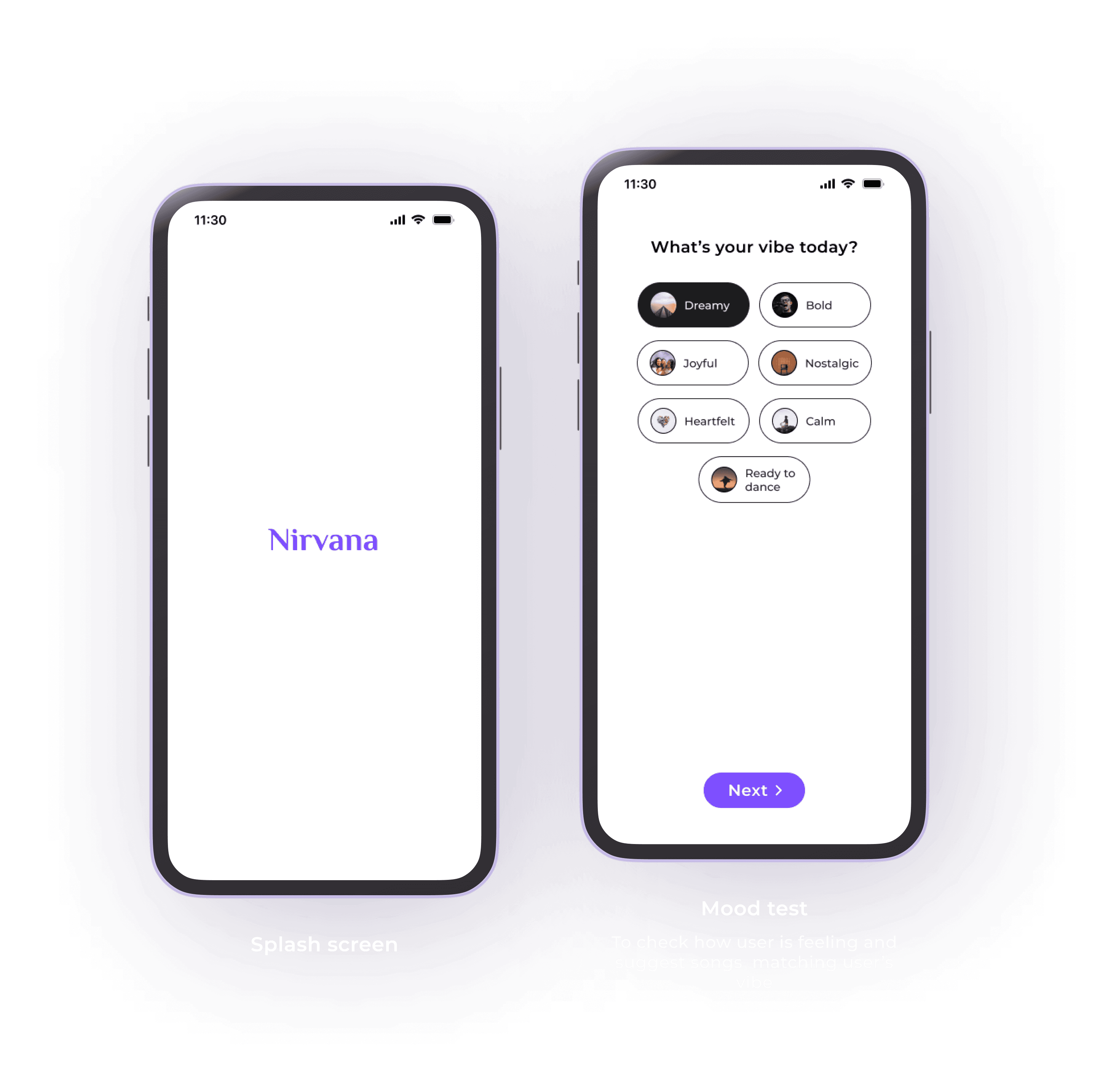
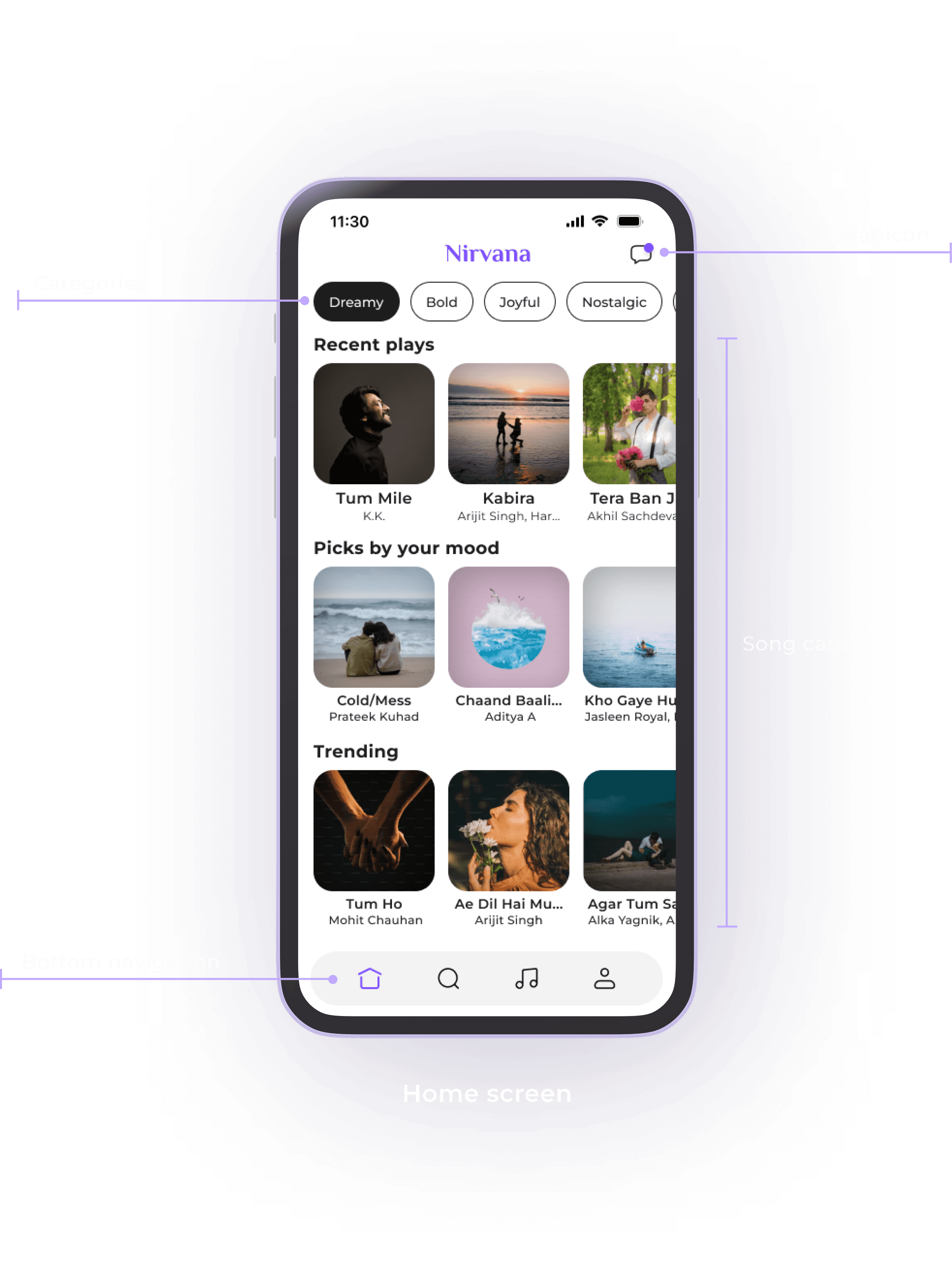
Mood based recommendations: A feature that suggest tracks based on the user need.
Implement a feature that allows users to share songs, playlists, or albums with in-app messaging.
Replace static controls with swipe gestures to play the next and previous song.
Mood based recommendations: A feature that suggest tracks based on the user need.
Implement a feature that allows users to share songs, playlists, or albums with in-app messaging.
Replace static controls with swipe gestures to play the next and previous song.
Mood based recommendations: A feature that suggest tracks based on the user need.
Design process
Design process
Design process
Discover - Competitive analysis, User research
Define - User persona, empathy map
Ideate - User flow, Information architecture
Design - Wireframe, Visual design, prototype
Test - Usability testing, Feedback implementation
Discover - Competitive analysis, User research
Define - User persona, empathy map
Ideate - User flow, Information architecture
Design - Wireframe, Visual design, prototype
Test - Usability testing, Feedback implementation
Discover - Competitive analysis, User research
Define - User persona, empathy map
Ideate - User flow, Information architecture
Design - Wireframe, Visual design, prototype
Test - Usability testing, Feedback implementation
Competitive analysis
Competitive analysis
Competitive analysis
Music discovery
Lossless audio quality
Collaborative playlist
Sharing within app
Mood based recomendation
Swipe able interfaces
Music discovery
Lossless audio quality
Collaborative playlist
Sharing within app
Mood based recomendation
Swipe able interfaces
Music discovery
Lossless audio quality
Collaborative playlist
Sharing within app
Mood based recomendation
Swipe able interfaces
Spotify
Yes
No
Yes
No
Yes
No
Spotify
Yes
No
Yes
No
Yes
No
Spotify
Yes
No
Yes
No
Yes
No
Yt music
Yes
No
No
No
Yes
No
Yt music
Yes
No
No
No
Yes
No
Yt music
Yes
No
No
No
Yes
No
Apple music
Yes
Yes
Yes
No
No
No
Amazon music
Yes
Yes
No
No
No
No
Secondary research
Secondary research
Secondary research
Unlike platforms like Instagram or TikTok, where users can share content such as reels or posts directly within the app interface, music streaming apps often rely on external links or for sharing. This disrupts the social experience and adds unnecessary friction, especially for youth who prefer intuitive and quick ways to connect.
Quantitative insights:
1. Spotify Wrapped saw over 60 million shares globally, highlighting how personalization combined with shareability drives viral engagement.
2. Around 42% of Gen Z and 36% of millennials prefer music recommendations from friends and peers over algorithms.
Business Opportunity (In app sharing):
1. Enhance user retention by fostering social connections.
2. Boost platform virality through organic peer-to-peer content spread.
3. Drive new users via collaborative music discovery.
Unlike platforms like Instagram or TikTok, where users can share content such as reels or posts directly within the app interface, music streaming apps often rely on external links or for sharing. This disrupts the social experience and adds unnecessary friction, especially for youth who prefer intuitive and quick ways to connect.
Quantitative insights:
1. Spotify Wrapped saw over 60 million shares globally, highlighting how personalization combined with shareability drives viral engagement.
2. Around 42% of Gen Z and 36% of millennials prefer music recommendations from friends and peers over algorithms.
Business Opportunity (In app sharing):
1. Enhance user retention by fostering social connections.
2. Boost platform virality through organic peer-to-peer content spread.
3. Drive new users via collaborative music discovery.
Unlike platforms like Instagram or TikTok, where users can share content such as reels or posts directly within the app interface, music streaming apps often rely on external links or for sharing. This disrupts the social experience and adds unnecessary friction, especially for youth who prefer intuitive and quick ways to connect.
Quantitative insights:
1. Spotify Wrapped saw over 60 million shares globally, highlighting how personalization combined with shareability drives viral engagement.
2. Around 42% of Gen Z and 36% of millennials prefer music recommendations from friends and peers over algorithms.
Business Opportunity (In app sharing):
1. Enhance user retention by fostering social connections.
2. Boost platform virality through organic peer-to-peer content spread.
3. Drive new users via collaborative music discovery.
Youths aged 18–30, who dominate dating app usage, are also a significant demographic for music streaming services. They prefer apps that align with their lifestyle—fun, fast, and visually appealing.
Qualitative insights:
68% of Gen Z prefer interactive and visually stimulating interfaces that gamify user experience.
Business Opportunity (Swipe able interface):
1. Increased time spent on the app due to gamified music exploration.
2. Encourages users to engage more with the discovery process, driving up daily active users (DAU) and monthly active users (MAU).
Youths aged 18–30, who dominate dating app usage, are also a significant demographic for music streaming services. They prefer apps that align with their lifestyle—fun, fast, and visually appealing.
Qualitative insights:
68% of Gen Z prefer interactive and visually stimulating interfaces that gamify user experience.
Business Opportunity (Swipe able interface):
1. Increased time spent on the app due to gamified music exploration.
2. Encourages users to engage more with the discovery process, driving up daily active users (DAU) and monthly active users (MAU).
Youths aged 18–30, who dominate dating app usage, are also a significant demographic for music streaming services. They prefer apps that align with their lifestyle—fun, fast, and visually appealing.
Qualitative insights:
68% of Gen Z prefer interactive and visually stimulating interfaces that gamify user experience.
Business Opportunity (Swipe able interface):
1. Increased time spent on the app due to gamified music exploration.
2. Encourages users to engage more with the discovery process, driving up daily active users (DAU) and monthly active users (MAU).
User personas
User personas
User personas
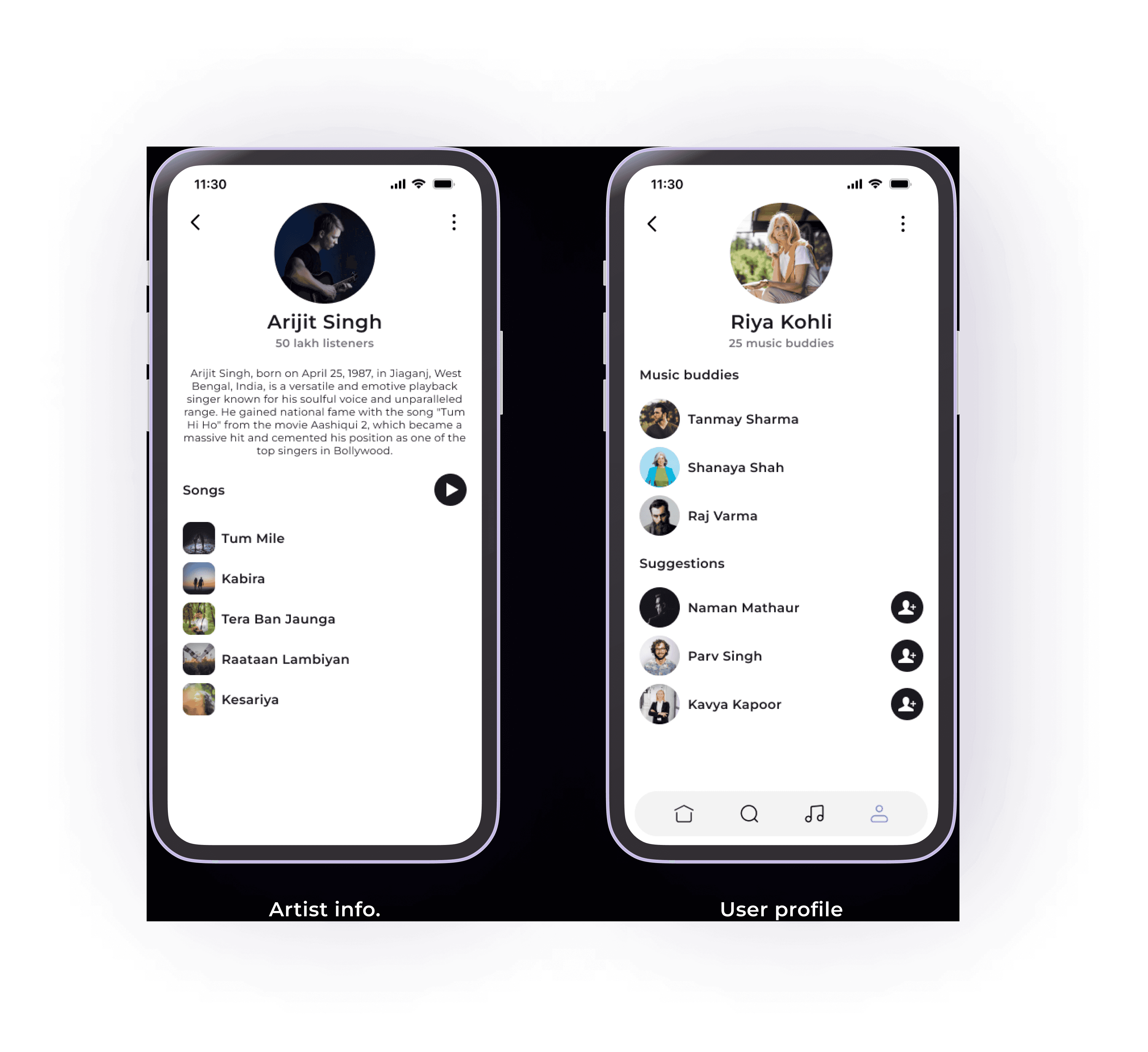
Name: Riya Kohli
Age: 21
Occupation: College Student
Location: Mumbai, India
Bio:
Riya is an avid music lover who often curates playlists for every mood, from study sessions to weekend parties. Music is her primary way to connect with friends, but she finds it inconvenient to share songs and playlists across platforms. She is also active on Instagram and prefers apps that offer seamless social sharing features.
Goals:
- Share music easily.
- Avoid switching between apps when recommending songs to friends.
- Strengthen friendships through shared music experiences.
Pain Points:
- Sharing music links feels clunky and unengaging.
- Lack of personalization and immediacy in sharing songs.
- Current music apps fail to provide social features that resonate with Gen Z's preferences.
Motivations:
- Simplify and enhance the joy of sharing music within the app.
- Build emotional connections through shared playlists.
- Feel understood by an app that mirrors her social behavior.
Name: Riya Kohli
Age: 21
Occupation: College Student
Location: Mumbai, India
Bio:
Riya is an avid music lover who often curates playlists for every mood, from study sessions to weekend parties. Music is her primary way to connect with friends, but she finds it inconvenient to share songs and playlists across platforms. She is also active on Instagram and prefers apps that offer seamless social sharing features.
Goals:
- Share music easily.
- Avoid switching between apps when recommending songs to friends.
- Strengthen friendships through shared music experiences.
Pain Points:
- Sharing music links feels clunky and unengaging.
- Lack of personalization and immediacy in sharing songs.
- Current music apps fail to provide social features that resonate with Gen Z's preferences.
Motivations:
- Simplify and enhance the joy of sharing music within the app.
- Build emotional connections through shared playlists.
- Feel understood by an app that mirrors her social behavior.
Name: Riya Kohli
Age: 21
Occupation: College Student
Location: Mumbai, India
Bio:
Riya is an avid music lover who often curates playlists for every mood, from study sessions to weekend parties. Music is her primary way to connect with friends, but she finds it inconvenient to share songs and playlists across platforms. She is also active on Instagram and prefers apps that offer seamless social sharing features.
Goals:
- Share music easily.
- Avoid switching between apps when recommending songs to friends.
- Strengthen friendships through shared music experiences.
Pain Points:
- Sharing music links feels clunky and unengaging.
- Lack of personalization and immediacy in sharing songs.
- Current music apps fail to provide social features that resonate with Gen Z's preferences.
Motivations:
- Simplify and enhance the joy of sharing music within the app.
- Build emotional connections through shared playlists.
- Feel understood by an app that mirrors her social behavior.
Name: Parv Singh
Age: 26
Occupation: Video Editor
Location: Bengaluru, India
Bio:
Parv enjoys exploring new music while working, traveling, or relaxing. As someone immersed in design trends, he is critical of outdated interfaces. He frequently uses Tinder, where swipe gestures feel modern, and he wishes music apps would adopt similar, more interactive designs.
Goals:
- Use swipe gestures for intuitive music control and discovery.
- Explore playlists and songs through engaging interactions.
- Experience a playback interface that feels dynamic and modern.
Pain Points:
- Static play, pause, and skip buttons feel uninspiring compared to interactive interfaces.
- Limited engagement on the playback screen compared to other apps.
- Apps don’t align with his tech-savvy, design-conscious preferences.
Motivations:
- Discover music apps that prioritize aesthetics and functionality.
- Use cutting-edge features like swipes to make playback enjoyable.
- Align music app experience with other modern apps he uses frequently.
Name: Parv Singh
Age: 26
Occupation: Video Editor
Location: Bengaluru, India
Bio:
Parv enjoys exploring new music while working, traveling, or relaxing. As someone immersed in design trends, he is critical of outdated interfaces. He frequently uses Tinder, where swipe gestures feel modern, and he wishes music apps would adopt similar, more interactive designs.
Goals:
- Use swipe gestures for intuitive music control and discovery.
- Explore playlists and songs through engaging interactions.
- Experience a playback interface that feels dynamic and modern.
Pain Points:
- Static play, pause, and skip buttons feel uninspiring compared to interactive interfaces.
- Limited engagement on the playback screen compared to other apps.
- Apps don’t align with his tech-savvy, design-conscious preferences.
Motivations:
- Discover music apps that prioritize aesthetics and functionality.
- Use cutting-edge features like swipes to make playback enjoyable.
- Align music app experience with other modern apps he uses frequently.
Name: Parv Singh
Age: 26
Occupation: Video Editor
Location: Bengaluru, India
Bio:
Parv enjoys exploring new music while working, traveling, or relaxing. As someone immersed in design trends, he is critical of outdated interfaces. He frequently uses Tinder, where swipe gestures feel modern, and he wishes music apps would adopt similar, more interactive designs.
Goals:
- Use swipe gestures for intuitive music control and discovery.
- Explore playlists and songs through engaging interactions.
- Experience a playback interface that feels dynamic and modern.
Pain Points:
- Static play, pause, and skip buttons feel uninspiring compared to interactive interfaces.
- Limited engagement on the playback screen compared to other apps.
- Apps don’t align with his tech-savvy, design-conscious preferences.
Motivations:
- Discover music apps that prioritize aesthetics and functionality.
- Use cutting-edge features like swipes to make playback enjoyable.
- Align music app experience with other modern apps he uses frequently.
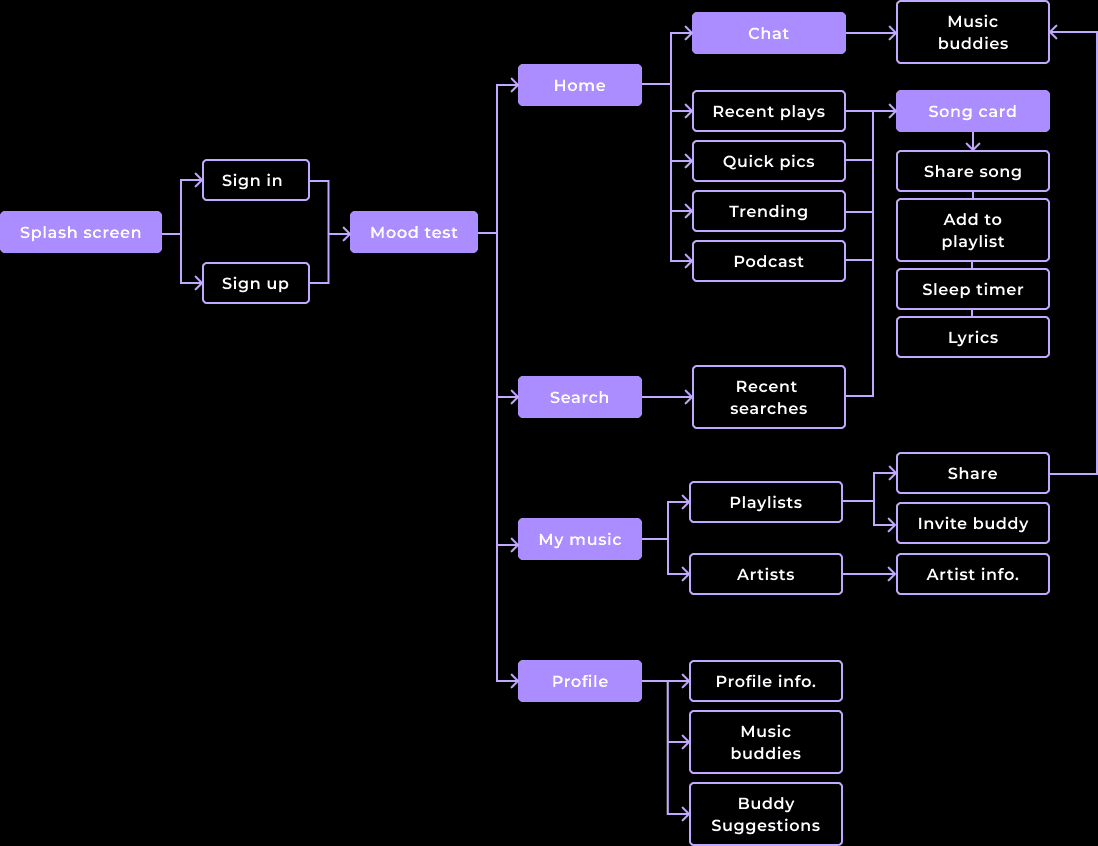
User flow
User flow
User flow
Typography and colours
Typography and colours
Typography and colours
Montserrat
Montserrat
Montserrat
H1 - 24 - Bold
H2 - 18 - Bold
H3 - 16 - Semibold
B1 - 14 - Medium
B2 - 12 - Regular
Hex -7C4DFF
Hex -7C4DFF
Hex -7C4DFF
Hex - 1C1C1E
Hex - 1C1C1E
Hex - 1C1C1E
Hex - E1D6FF
Hex - E1D6FF
Hex - E1D6FF
Hex - FFFFFF
Hex - FFFFFF
Hex - FFFFFF
Hex - F3F3F3
Hex - F3F3F3
Hex - F3F3F3
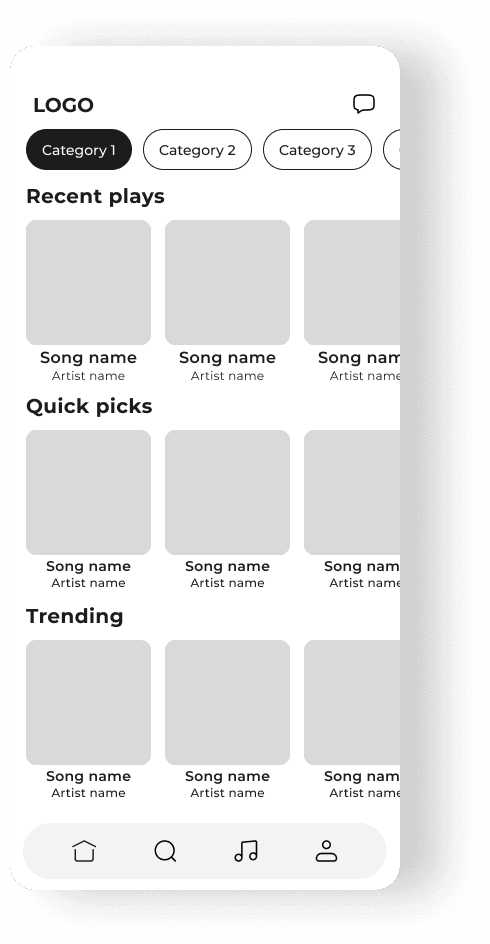
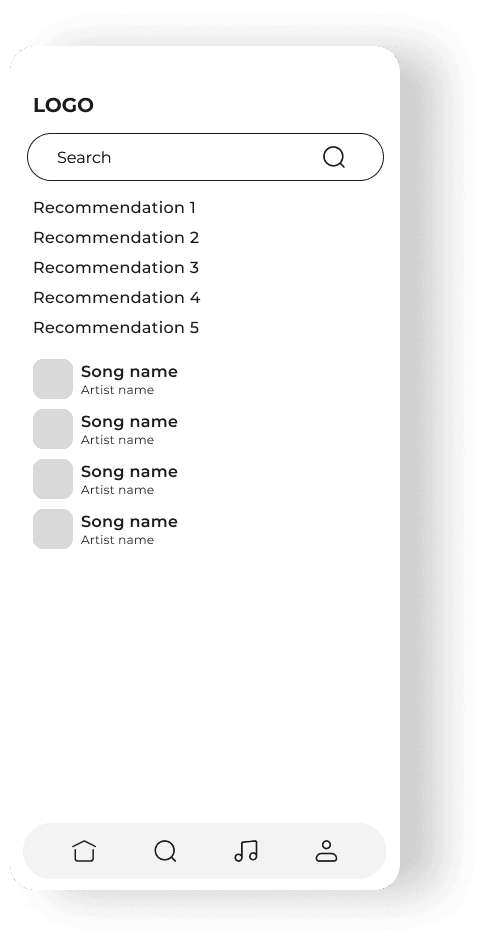
Wireframes
Wireframes
Wireframes
Final screens
Final screens
Final screens
Learnings
Learnings
Learnings
User-Centric Problem Solving: Throughout the project, the importance of putting user needs, behaviors, and expectations at the center of design and feature development.
Importance of Competitive Analysis: The competitive analysis revealed that while market leaders like Spotify, Apple Music, and YouTube Music are strong in content delivery and personalization but there are gaps, learning from competitors helped identify opportunities for differentiation and innovation.
Data-Driven Design Decisions: Secondary research provided quantitative and qualitative data to guide decisions
User-Centric Problem Solving: Throughout the project, the importance of putting user needs, behaviors, and expectations at the center of design and feature development.
Importance of Competitive Analysis: The competitive analysis revealed that while market leaders like Spotify, Apple Music, and YouTube Music are strong in content delivery and personalization but there are gaps, learning from competitors helped identify opportunities for differentiation and innovation.
Data-Driven Design Decisions: Secondary research provided quantitative and qualitative data to guide decisions
User-Centric Problem Solving: Throughout the project, the importance of putting user needs, behaviors, and expectations at the center of design and feature development.
Importance of Competitive Analysis: The competitive analysis revealed that while market leaders like Spotify, Apple Music, and YouTube Music are strong in content delivery and personalization but there are gaps, learning from competitors helped identify opportunities for differentiation and innovation.
Data-Driven Design Decisions: Secondary research provided quantitative and qualitative data to guide decisions